Carbon Taxes Are Even More Regressive Globally Than Nationally (Wonkish)

Collectively, progressive are still grasping about for some way to reduce carbon emissions without flat out limits or bans. David Roberts has been blogging about carbon taxes — http://www.vox.com/2016/4/26/11470804/carbon-tax-political-constraints

Roberts’ main premise is that the political will for carbon taxes just isn’t there, but that political resistance may decrease depending on what is done with the revenues.

But Roberts assumes that the price for a carbon tax would be set according to the “social cost of carbon” — a rather fictional calculation of the dollar value of all the harms caused by climate catastrophe, discounted to present value.  This might be somewhere between $10 and $150 per ton of CO2. Unfortunately, such a tax would not avoid climate catastrophe, it would just achieve the economically “optimal” level of climate catastrophe. Put simply, carbon emitters in wealthy nations would prefer to pay the tax and keep emitting as long as the tax is based on the relatively low dollar “value” of climate harms in the developing world. To make it worse, the taxes collected remain in the wealthy nations; there is no thought to paying compensation to those who actually suffer the harms.

Neo classical economic thinking accepts this result as optimal — it is just fine for the poor to get poorer as long as the wealthy get wealthier by a larger margin and aggregate wealth is increased. If society cares about fairness and distributive justice, then it can redistribute the wealth and make everyone better off.  But it doesn’t. I explain this in greater detail in a post today on Pace’s GreenLaw blog

In order to avoid catastrophic climate change in excess of 2 degrees C, global GHG  emissions probably have to be cut by around 80% within about ten or fifteen years, or eliminated entirely within twenty years or so. To achieve this, a carbon tax would have to be more like $1,000 per ton (about $10 per gallon of gasoline).

My own goal, and the purpose of this blog, is to talk about achieving that 80% reduction in my individual carbon footprint right now. Because we can.

ABOUT THOSE ELECTRONS . . .

Whenever I tell people I am going zero fossil fuels (or low fossil fuels), they ask me whether I am off the grid with solar panels.  I am not (too many trees shading our house).  But I have a renewable energy contract with Con Ed Solutions that certifies that my electricity is 100% wind energy. So I count my residential electricity consumption as zero carbon emissions. Other renewable energy suppliers include Green Mountain Energy and Arcadia Power.

I often hear people say “You know, the electrons in your wires are still coming from the Indian Point nuclear plant and the coal burning plants upstate, so you are not really buying renewable energy, since your utility can’t separate out wind electrons from fossil fuel electrons.”

Actually, though, I am not buying electrons, I am buying energy. And no actual electrons are being delivered to my house by O&R Utilities.  They are already there.

Let me geek out on you here. First, a confession – I was a nerdy kid who was into electronics and ham radios. I nearly electrocuted myself several times before age 14. I KNOW electrons.

And the electrons in your house don’t come from the power plant. They just go back and forth in a loop between your house and the nearest utility pole transformer.  That’s called alternating current. Electrons don’t actually cross through transformers, they just transfer their energy from one loop of electrons to another, changing the voltage in the process. There will be many transformers between your house and the many power plants and wind turbines out there connected to the grid, each sending their batch of electrons back and forth in a closed loop, but none of them actually sending any electrons down the line to the next loop.

It looks something like this, except there are multiple power plants (including wind) connected to multiple substations at the source. That’s what we call the electric grid.

power-transmission

In this picture, all your electrons go back and forth from your house to the transformer drum on the pole, which is sapping energy from the grid, but not taking any actual electrons.

So what I am buying is energy, pure, massless, non physical electro motive force, and that energy was put into the grid somewhere by a wind turbine and mixed with all the other energy moving around.

Think of it this way: my employer, Pace University, makes a direct digital deposit to my checking account twice a month to pay me.  Also about twice a month I go to the ATM to get some cash.  I never pause to think whether some of the twenties the ATM spits out at me actually passed through Exxon Mobil’s checking account. Even if they did, I wouldn’t be working for the fossil fuel industry.  Rather, my employer made an abstract, non-physical deposit into a vast interconnected network that happens to be used by some pretty odious fossil fuel interests as well. So, too, with the 100% wind energy delivered to my house.

Which is very very different from the gas and diesel you put into your car.  In that case, the physical molecules you are putting in your tank really did come from the tar sands of Alberta or the beach-tarred Gulf of Mexico, or some similar hydrocarbon wracked place on Earth.

And, if everyone insisted on 100% renewable electricity like I do  . . . we’d bang up against the grid transmission limits very quickly, prices for renewable energy would skyrocket, and profit seeking electric generation companies would invest in more of it instead of building more fossil fuel plants.  Which would be a good thing.

EARTH WEEK-END: FOSSIL FREE PAELLA

IMG_1247

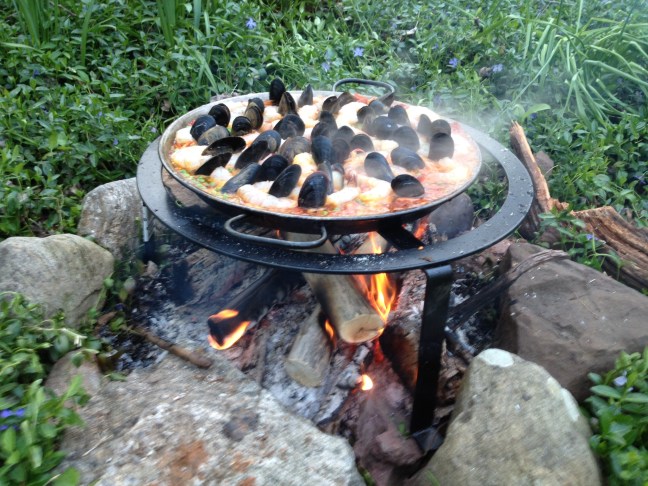
So . . . my fossil free Earth Week stretched into Fossil Free nine days around Earth Day. Just had to try out the new wood fire paella pan stand.  There is always a little more deadwood in the backyard to burn.  So we invited some friends, neighbors, and family over for a meal in which no planets were killed.

A true seafood paella has lots of shellfish in it. Mussels score high on the Monterey Bay sustainability guide. But octopus and squid can be problematic.  US caught are best, but are hard to find. And, though I already knew farmed Asian shrimp was an environmental disaster, I was shocked to see an analysis suggesting that a pound of farmed shrimp is the equivalent of one ton of carbon dioxide emissions — about the same as a 100 gallons of gasoline. For comparison, a pound of beef is about the equivalent of 28 pounds of carbon dioxide.  So farmed shrimp would be close to 100 times worse for the climate, ounce for ounce, than beef. One pound would be 25% of my carbon budget for the whole year!

So after a lovely bike ride to Haverstraw and back, and calling ahead to be sure, I hopped in the electric car to provision at the Fairway in Nanuet, where they were selling what they assured me were wild caught, USA shrimp. The paella campfire worked like a charm, the sofrito simmering its fragrance into the evening air, and a crispy socarrat at the bottom that only a wood fired paella can deliver. Robin served an apple “crisp” cooked in the solar oven. A pleasant time was had by all. Sorry, no leftovers.

Robin threw all the plates into the dishwasher, and hinted that there should be hot water in the morning to run it. I went down into the cellar to turn the water heater back on and light the pilot. Back to a low fossil life, just not a fossil free life.

MY ELECTRIC MOTORCYCLE GANG


People seem to roll their eyes when you tell them you are watching your carbon footprint, as if low carbon must mean no fun in life.  But everyone knows that the electric Teslas are some of the hottest cars out there. Electric motorcycles are also some of the hottest motorcycles out there. I started riding as a zero carbon way to get across the Tappan Zee Bridge on my commute to work. I have a Zero, but there are a few other brands out there now, and even Harley Davidson has an electric motorcycle in the works. Thrill riding and zero carbon are not incompatible.

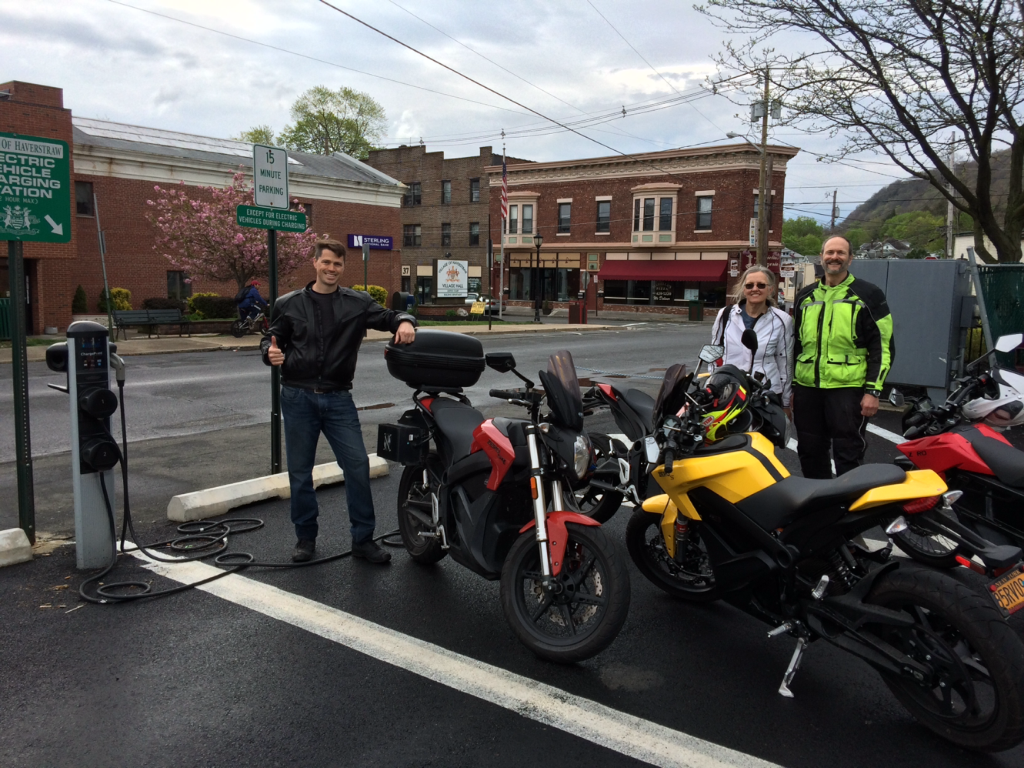
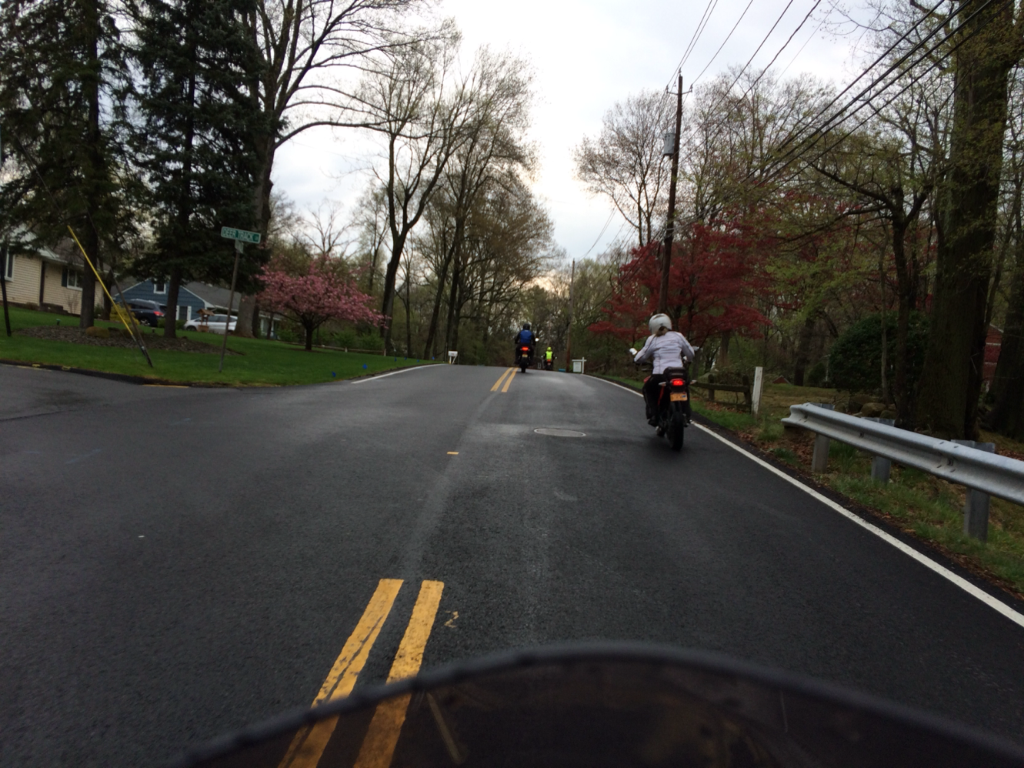
We ended Earth Week yesterday with an electric motorcycle group ride up to Bear Mountain State park. If four riders counts as a motorcycle gang, we have the quietest motorcycle gang on the planet! Ben Rich, who is one of electric motorcycling’s most enthusiastic boosters (he’s one of the first people to have ridden all electric cross country) organized the group ride as a celebration of earth day, and a chance to stop by Rockwell Cycles in Fort Montgomery, the NY metro area’s Zero dealer. Even though Rockwell Cycles seem to be selling a lot more Ducatis than Zeros, Marian Rockwell sees electrics as the future of motorcycling. One boomer customer looking at the line of gleaming Ducatis was resisting though,”It’s all about the sound and the vibration,” he was explaining to the salesman. But a younger customer there was eager to try an electric.

Bear Mountain park is already a Mecca for bikers of the conventional variety. With miles of winding roads through the pines and hardwoods and shimmering lakes, it feels like a trip to a national park. With the range on electric bikes well over a hundred miles, riding through the park is in reach for a large portion of the metro area.

We took a break from riding to hike to the top of Bald Mountain, too. I’ll admit that I feel a little guilty silently and effortlessly passing the bicyclists on the roads at Bear Mountain – I miss the workout and the one-ness of bicycling, too.

Photos thanks to Ben Rich and Nick D’Ambrosio.

EARTH DAY: THE BEST THINGS ARE FOSSIL FREE!

IMG_1276

Happy Earth Day! I am now in my seventh day of living without any direct purchase or use of fossil fuels — and I can’t say I am missing much.Went hiking Saturday and Sunday, took the electric car. Got to work by kayaking and biking on Monday and Thursday. Rode my electric motorcycle to work on Tuesday and Wednesday, and charged it with the solar panels on the roof. Took the electric car to work today, because of the forecast for rain.  Cooked with an alcohol stove Saturday, charcoal grill Sunday, the induction hot plate on Monday and Tuesday. crock pot powered with solar panels Wednesday, an on my twig-fueled camping stove today.

So, the best things in life are fossil free! Such as . . .

  • Walking in the April woods and seeing he little purple flowers blooming on the trail.
  • That giddy feeling you get when you twist the throttle on an electric motorcycle and you are doing 80, noislessly and instantly.
  • Saturday morning coffee and waffles with no commitments
  • waking up on a sailboat to the sound of docks creaking and wavelets lapping
  • Cresting a hill on your bicycle anticipating the free-fall of the downhill ahead
  • White throated sparrows singing outside your open bedroom window first thing in the morning.
  • Dinner on the porch, a bottle of wine, sunset lighting Clausland Mountain a glowing red.
  • Slipping under the covers on a cool April night with the love of your life and hugging her all night.
  • Internet video hangouts with your kids even though they have grown up and moved away
  • the way the River under your kayak is really cool even on an unnaturally warm April day
  • The exuberance a dog shows when you say “Wanna go for a hike?”
  • Getting a favorable ruling from the NY DEC, rejecting the gas pipeline project you have been fighting.
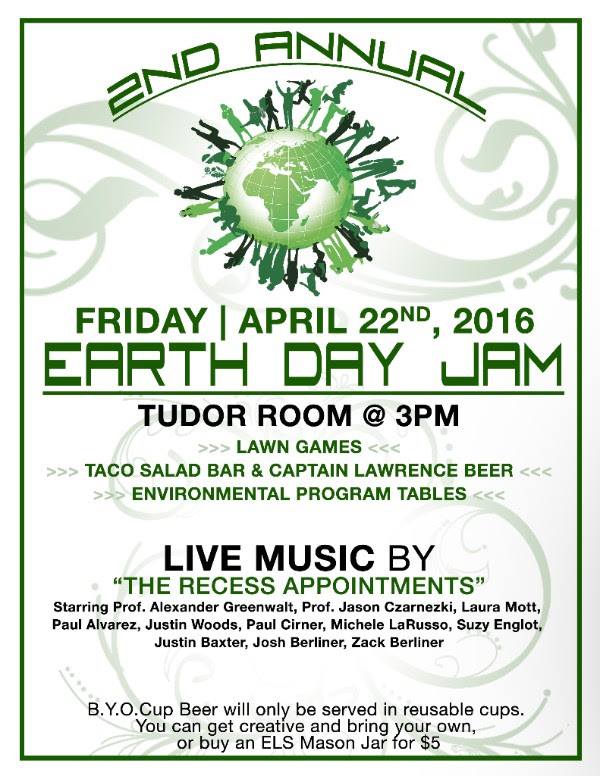
  • The Earth Day Jam at Pace Law School
  • The wild turkeys in the backyard
  • The way a small electric car can change lanes in traffic instantly and effortlessly
  • That warm feeling in every muscle in your body after spending two hours biking and paddling, and the natural cannabinoids they release.
  • That feeling of peace you get from living consistently with deeply held beliefs.

I am looking forward to a hot shower. Eventually.

FOSSIL FREE DAY 6 : CLEANING UP

IMG_1290So I have been asked the inevitable personal hygiene questions – are you really going without showering for the week? Or are you copping a hot shower at your office with that fossil fueled water heater at the E-House?

OK, I admit it – I took a shower at work when I biked and paddled in on Monday and today (Thursday). But I went all in and took a cold “navy shower.”  Still sweating from the ride to work, I popped into the shower with just enough cool water to wet my hair and body, soaped up without the water running, then rinsed off. I could probably have justified a hot shower at work as being an “indirect” greenhouse gas emission, since no-one asked me how to heat the hot water at my office. But I want to err on the side of sustainability this week.

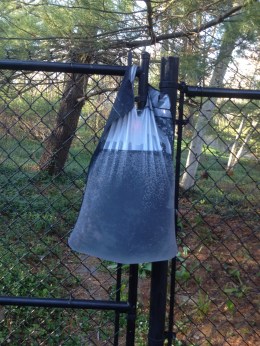
I can do the quick sponge bath at home, and if I am feeling luxurious, I can heat some water in the electric kettle. The well-water fed shower is just a little too shockingly cold even for a navy shower. And our experiment at home with a solar shower bag didn’t really work, since it is no good first thing in the morning, and it had cooled off too much by the time we got home from work.

So, don’t worry, going fossil free does not stink. I haven’t gone full “No Impact Man,” not by a long shot. In the long run . . . well, they do make electric water heaters after all, and renewable electric service (which I have) is fossil free. But the extended warranty on my gas water heater doesn’t expire until about 2031. That sounds about right — fifteen years for the planet to go entirely fossil free, or face the consequences. According to Global Warming’s Terrifying Math

we’ll blow through our 565-gigaton allowance in 16 years, around the time today’s preschoolers will be graduating from high school.

FOSSIL FREE DAY 5: ABUNDANT CHEAP SOLAR POWER

IMG_1289Solar panels are cheap these days. When I put a panel on our sailboat ten years ago, one panel cost about $600. Now the price is less than one quarter of that.

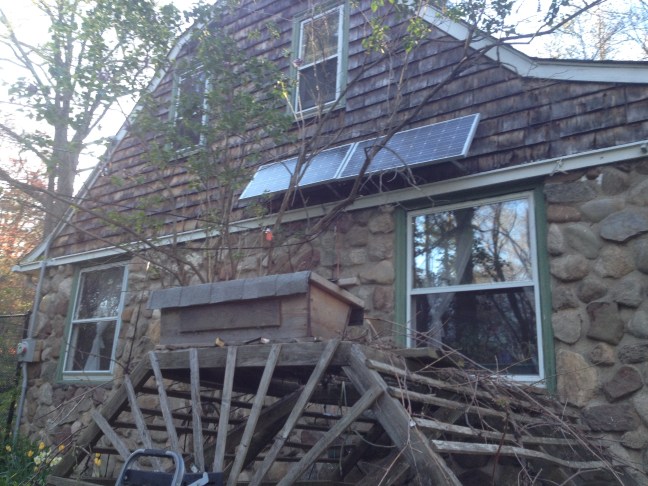
But professional installation is still pricey. And when we had an installer look at our house he took one look at the trees shading our roof and laughed. So I have made do with a couple of DIY solar projects in places that are easy to reach with the ladder, and without breaking into the house wiring. Four panels I installed  on our roof four years ago run a battery bank for charging the electric motorcycle. The two panels I put up on the side of the house on Saturday charge another battery bank that runs a small 500 watt inverter tapped into a generator outlet.  For reasons I now forget, the circuit only runs to two outlets in our living/dining room.

But solar power production is way up this week! That April sun is climbing higher in the sky, and the shading trees haven’t leafed out yet.  I have been charging my motorcycle exclusively from the rooftop solar panels since last Thursday — three days of solar is about enough for one round trip to work. Two round trips a week by motorcycle and two paddling and pedaling trips a week, and I am most of the way to a 100% renewable commute, at least during the sunny, ice free half of the year.

In an accommodation to my fossil free Earth Week eccentricity, Robin went and ordered one of those solar ovens. But today I experimented with solar cooking of the more indirect sort — I ran our electric crock pot off of the circuit powered by the new solar panels.  I started a rice congee cooking before we left in the morning, and it was ready to season, garnish and eat when we got home.  And the battery bank wasn’t dead.

IMG_1291.JPG

It’s easy enough to skip the gas clothes dryer in the April sun, too. But my experiment with a camping sun shower bag was not as successful. That one suffered from the setting sun and the cool April evening – it was just a five gallon bag of cool water when we got home.

Composed and published on a solar powered laptop computer.


FOSSIL FREE DAY FOUR: CARBON TAX DAY?

First thing this morning, we ran to our polling place to vote in the NY Democratic Presidential primary.  Happily, our new polling place is in running distance, so we killed our morning exercise and civics responsibilities with one stone. I am not disclosing my vote here, but I am sure that either Democratic candidate will be worlds better on climate issues than any Republican candidate.  Let the climate win in November!

Bernie Sanders is probably the biggest climate hawk in a presidential race since Al Gore ran in 2000.  His proposed response to climate change is to

Cut U.S. carbon pollution by 40 percent by 2030 and by over 80 percent by 2050 by putting a tax on carbon pollution, repealing fossil fuel subsidies and making massive investments in energy efficiency and clean, sustainable energy such as wind and solar power.

Putting aside the question whether cutting US emissions just 40% by 2030 is enough to prevent dangerous global temperature increases over 2 degrees C (it is almost certainly not), what would a carbon tax sufficient to achieve an 80% reduction in US carbon emissions look like? Climate hawks don’t like to tell you.  One study suggests that achieving these reductions would require a carbon tax of about $100 per ton in 2030 (to get a 40% reduction), and about $1,000 per ton by 2050, to get an 80% reduction.

OK, that study was produced by the National Association of Manufacturers — blood opponents of a carbon tax — but my gut feeling is that they are not far off. What would it take to get Americans to use 80% less gasoline?  Fifteen dollar gas sounds about right.  Don’t get me wrong – I think that would be a good thing.   Gas is too cheap for the planet. It is too bad that a President Sanders could not just impose a $1,000 per ton carbon tax.  Unfortunately, only the (Republican controlled) house can impose and raise taxes.

My own carbon philosophy holds that living sustainably means means living within global limits NOW, not just making a promise that someone else will manage to live within global limits by 2050.  The average US per capita carbon footprint is about 20 tons of CO2.  My goal is to keep within about 20% of that goal (an 80% reduction).  Right now.

OK, I admit it, I am one of those strange people that does not really mind doing tax returns every year (especially now that computers take care of all the tedious form filling out and calculations). I have a right brained, number crunching, quant side. I even worked as a tax accountant right out of college.  But the existentialist side in me also sees life as our canvas. We get to paint the picture we would like by every choice in our life.  Sometimes, it’s nice to step back and take a look at what picture we have painted in the past year.  Doing your taxes makes you do that for your financial life– what did you earn, what did you spend, what did you donate.

What if you had to fill out a tax return for your carbon footprint for the past year?  What would it look like?  It’s easy enough to do — there are plenty of good carbon calculators out there. I like Carbon Footprint, because it lets you input your actual consumption of gas and electricity (rather than using averages), and it includes indirect impacts, and compares your total to the global emissions target.  Here is the tool:

http://calculator.carbonfootprint.com/calculator.aspx


I think everyone who cares about global warming should take stock of their own footprint once a year.  If your emissions are above the US average, are you really part of the solution, no matter how vigorously you support the political cause of responding to climate change?  Are you ready to cut your own emissions by 40% or even 80%  Would you happily pay $100 or even $1,000 per ton for a carbon tax that you support politically? If you are an average American, and don’t want to change your life style, your tax in 2050 would be about $20,000.

2015 was one of the richest years of my life.  I was on sabbatical during the Spring semester, so I had some time to spend at our cabin upstate (solar powered, wood heated) working on some writing projects.  In March, we flew to Jerez, Spain to pick up our sailboat (we left it there in the summer of 2014), and sailed to Dakar, where I attended a conference of West African waterkeeper organizations.  We then sailed back across the Atlantic to Guadaloupe, on to the Virgin Islands, Turcs and Caicos, the Bahamas, and on home to NY. I took the train to Boulder, Colorado, in June, for the annual Waterkeeper conference, then took a side trip by van to float down the canyons of the Green River in Dinosaur National park. We drove to Toronto that summer to watch our son compete in the Pan American games, with a side trip camping on Parry Sound.  No-one would accuse me of having lived a life of deprivation last year.

Here is my carbon footprint for 2015:

CarbonFootprint2015

I hit my target of under 4 tons.  This included the one way flight to Spain, round trip train to Boulder, gas to supplement the wood stove in my house, diesel for our sailboat’s engine, driving on weekends. I think that the calculator has understated the carbon impacts of the train travel — .07 tons for a round trip to Boulder seems way too low.  But even if you multiplied by ten, I would be close to my target.

At a $100 per ton, I would owe a $360 carbon tax for the year.  At $1,000 per ton (what is probably necessary to get an 80% reduction), I would owe about $3,600.  I am going to make a $360 contribution to a relief organization for Bangla Desh as my carbon tax payment this year.

But don’t worry.  An actual carbon tax would not require individuals to file another tax return, with intrusive personal details about your life.  The tax would most likely be collected from the fossil fuel producers and utilities, and would be built into the price you paid for gas and electricity.

FOSSIL FREE DAY 3: GETTING TO WORK

IMG_1283

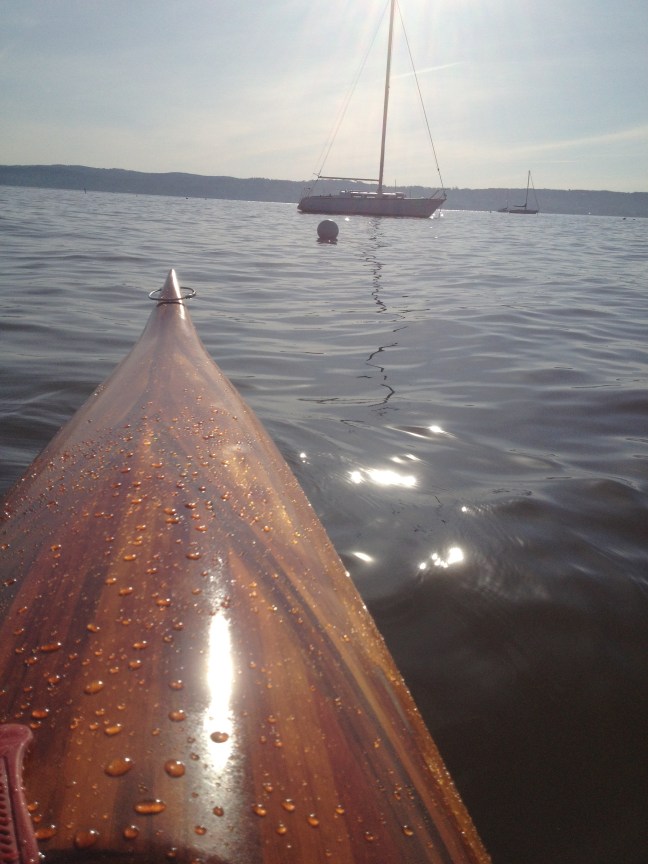
I got to work this morning by paddling my kayak across the Hudson River, then  riding my bicycle (already cached in Tarrytown) the rest of the way to work.  It was a perfect morning for my first paddle and pedal commute of the year. And, looking up at the line of tractor trailers stopped in the eastbound lanes of the Tappan Zee Bridge, I did not spend one second wishing I was driving to work. This is my best zero carbon commute option, but I would probably keep doing it even apart from the carbon advantages.  It’s a great whole body workout.  And at any given hour of the day I would rather be paddling a kayak or riding a bike instead of being in a motor vehicle.

Of course, at two hours door to door, plus sore muscle recovery time, it’s not something I can do every day, or something that most people can do at all.  It helps that I have flexible hours — and a shower — at work. I aim for two to three days a week for my sea level commute during the six months of the year with extended sunlight.

The rest of the time, I have a small fleet of small electric vehicles — a Zero electric motorcycle and a Smart For Two two seat electric.

IMG_1102

Face it, motorcycles are wicked fun. My Zero goes 95 miles an hour — faster than I really need to go on two wheels. It has a range of around 80 – 140 miles (the faster you go, the shorter the range).  Somehow I always end up getting to work faster when I ride my Zero than in a car.  I ride it to work whenever the sun is shining, roads are dry, and the temperature is above 25 degrees F.


SMART

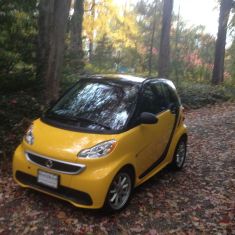
For the snowy, rainy, and cold days, I know have  my adorable little Smart car.  Why wait for the $35 grand Tesla Model 3 when you can get one of these babies for about $130 a month, three year lease. Whatever excuse people think they have for continuing to drive fossil fuel powered cars, “Electric cars are too expensive” is no longer one of them.  The range on the Smart is comparable to the Zero, between 50 and 80 miles depending on the temperature outside (heater and AC really kills the range). Like the Zero, it plugs right into a regular house socket. It’s not as zippy or fast as the motorcycle, but it is zippier than Robin’s Prius, and much much safer than the motorcycle. And, who really needs a car bigger than necessary to carry two people and a husky? (Just kidding).

IMG_1276


FOSSIL FREE FOR EARTH WEEK: COOKING WITHOUT GAS

  Day two of going fossil fuel free for Earth Week, and we have to figure out how to cook without our beloved antique Chambers gas stove.

Last night we went out in the Smart electric car for an evening walk along the Hudson, from the Dutchtown trailhead. We then went to our sailboat at its winter marina in Haverstraw for dinner and a night on the water.  The stove on the boat is fueled with propane, but that’s a fossil fuel, so we had to do without. Instead, we brought two backpacking stove alcohol burners with us to cook our dinner soup (caldo verde, a delicious and simple kale and potato soup).

Which leads to a question: is alcohol stove fuel fairy considered a non-fossil fuel?  Well, no one would argue that grain alcohol is a fossil fuel when you drink the stuff.  Stove fuel is mostly ethanol – which is grain alcohol.  But ethanol is the product of an industrial-political agricultural complex that is nearly as corrupt and unsustainable as the fossil fuel industry. And for every two BTUs of energy in ethanol, it took one BTU of fossil fuel energy to distill and process it.

Still EPA counts ethanol as a renewable fuel. That is because, thanks to the corn lobby, Congress requires EPA to do so.  But, unlike fossil fuels, the hydrocarbons that you burn in ethanol were recycled from the atmosphere on an ongoing basis, so ethanol is sustainable in the sense that the energy in ethanol comes from solar energy collected by the corn crops  while the corn was growing.  This is never true of  fossil fuels. Clean , sustainable, carbon neutral ethanol is possible. Clean, sustainable, carbon neutral liquid fossil fuels are not.  And ethanol doesn’t fit the definition of a fossil fuel.

So I will take credit for fossil fuel free caldo verde last night and Sunday morning pancake breakfast on board as well. We stopped for a hike up High Tor on the way home and passed the time trying to come up with seven different ways of cooking dinner without fossil fuels this week. Charcoal barbecue falls into the same general category as ethanol – the underlying energy is renewable biomass that is growing as fast as we use it, but the processing still involves fossil fuels.  So I can count charcoal as fossil free as well. We came up with  1) stove top dinners on alcohol burners, 2) barbecue, 3) stove top induction plate cooking, 4) some slow cooked meal in the electric crock pot, 5) a microwave cooked meal, 6) a stovetOp meal with the little Sierra backpackers wood stove I have with my camping gear, and 7) a paella cooked the traditional Spanish way over an open fire in the backyard.  Fossil fuel free cooking depends a lot on th availability of renewable electricity.  I need to get to work on that paella firepit soon.